

 Tiếng Việt
Wood logging is a continuous chain of activities, starting from forest surveying to select suitable trees, then proceeding with felling, processing tree trunks and transporting them to the processing plant. This process requires close coordination between forestry techniques, specialized equipment and safety standards to minimize environmental impact and maintain forest sustainability. Understanding each step helps optimize wood quality and limit risks during implementation.
Forest surveying and selection of trees for logging
Before logging begins, forestry teams must survey the forest status, determine the age, density and health of each area. The goal is to identify trees that meet logging standards without affecting the natural structure of the ecosystem. In addition, legal regulations and international standards also play an important role in deciding which areas are allowed for logging and which areas must be conserved.
Process of marking trees that meet standards
Once the area has been assessed as suitable, forestry personnel will mark trees that are of sufficient age, have straight trunks and are not in the protected group. This stage requires careful observation as each tree will directly affect the timber volume as well as post-harvest quality.
Marking also helps the logging team easily identify the location, falling direction and approach method when conducting felling.
In addition, this process also helps separate high-value trees to be handled and transported through special processes if necessary.
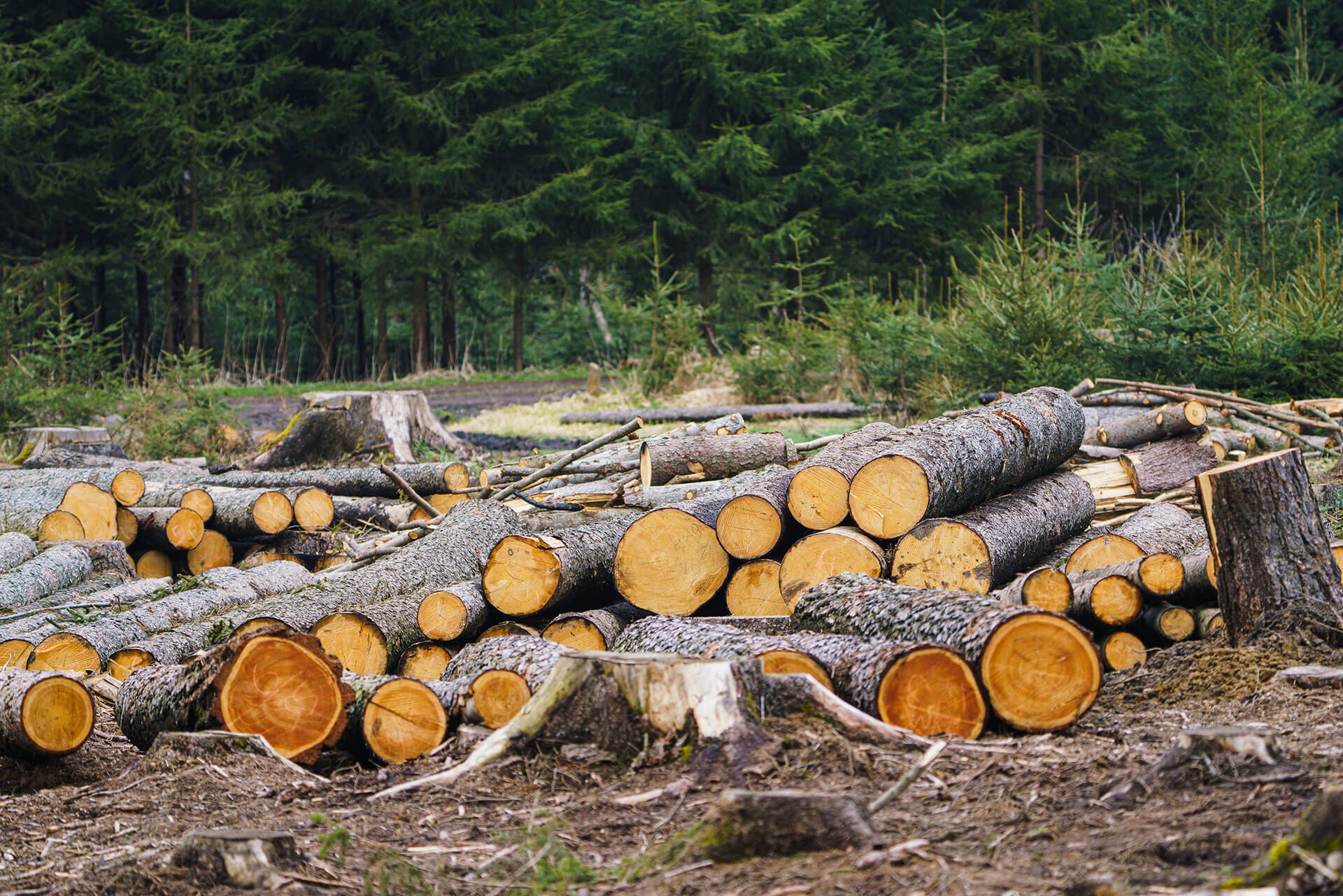
Felling and processing tree trunks
When entering the felling stage, forest workers will use chainsaws or specialized equipment to create an accurate falling direction to avoid affecting surrounding trees. This is the most dangerous stage, requiring experience and absolute compliance with safety principles. After the tree falls, the trunk will be cleaned of branches, cleared and cut into sections according to standard sizes for convenient classification and transportation.
Directing tree fall and sectional cutting
The sawyer must calculate the falling direction based on terrain, trunk slope and safety for nearby people. Creating directional cuts is a decisive factor that helps the tree fall in the right direction and minimizes risks. Once the tree trunk has been preliminarily processed, sectioning according to standard length will facilitate transportation by tractor or truck. Each wood section is recorded with a code and classified by quality to ensure it is suitable for its intended use later.
Conclusion
Wood logging is a technical process that requires calculation, safety and environmental responsibility. From forest surveying, tree marking, felling to sectioning and transportation, each step directly affects wood quality and ecosystem sustainability. Proper implementation of the process not only ensures production efficiency but also contributes to maintaining forest resources for future generations.